

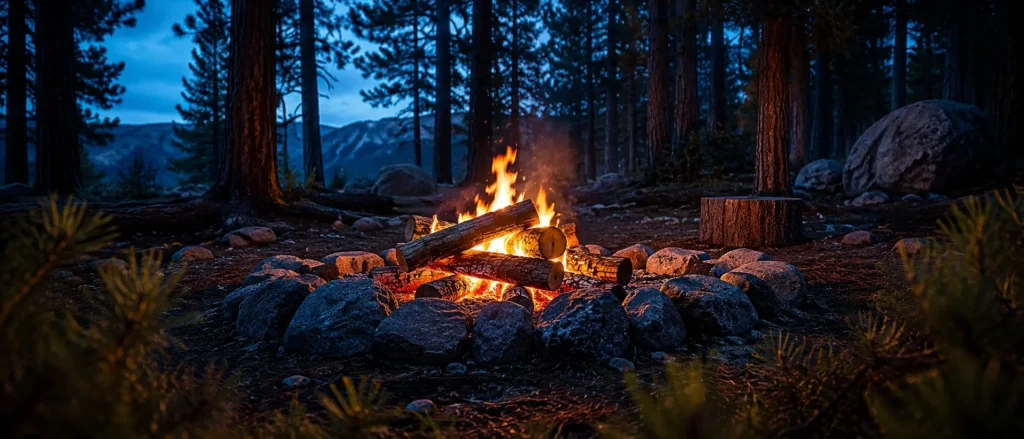
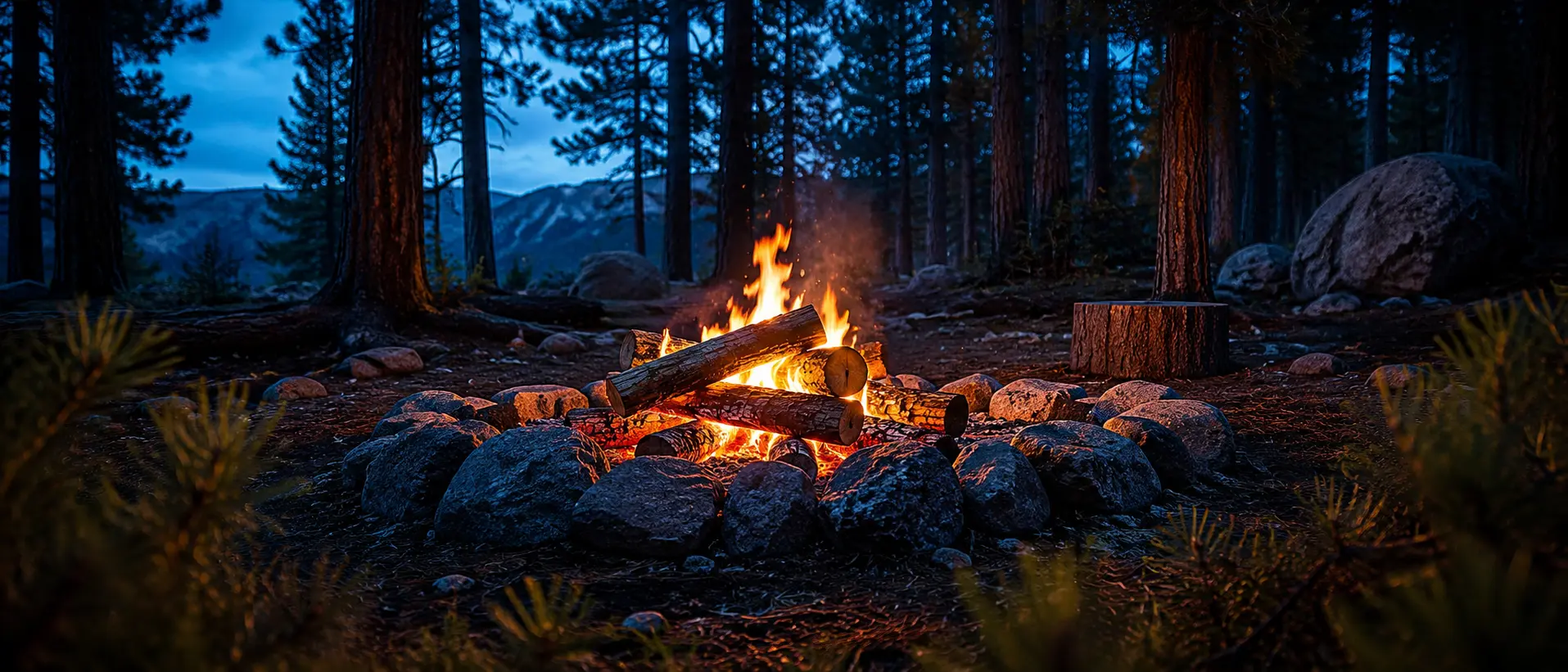
Building a campfire is one of those skills that looks deceptively simple until you actually try it in the field — in damp conditions, with green wood, as the temperature drops. Done well, a campfire provides warmth, light, the ability to cook, and a focal point for conversation that no battery-powered lantern can replicate.
Done poorly, it can be a genuine hazard. Every year, wildfires are started by improperly managed campfires — a pattern consistently documented in incident reports from the U.S. Forest Service, the UK Forestry Commission, and fire management agencies across Australia and Canada. The difference between a contained, useful fire and an uncontrolled one often comes down to preparation, site selection, and a small number of structural decisions made before you ever strike a match.
This guide covers the complete process from start to finish — how to select and prepare your fire site, what wood to use and why, the most effective fire lay structures for different purposes, lighting technique, and responsible extinguishing. It draws on principles from established outdoor organizations including Leave No Trace (LNT), the National Fire Protection Association (NFPA), and recognized bushcraft practice.
Choosing & Preparing Your Fire Site
Site selection is the single most important step most beginners skip. Where you build your fire determines how manageable it stays, how much damage it does to the surrounding environment, and whether it can spread. The ideal site is on bare mineral soil — not grass, not leaf litter, not peat — with no overhanging branches within at least three metres directly above.
If a designated fire ring or fire pit is available, always use it. These exist specifically to contain fire and protect the soil beneath. Many established campsites in the UK, the US, and across Europe provide fire rings precisely because they reduce cumulative environmental damage from repeated use. Leave No Trace guidelines, developed over decades by the LNT Center for Outdoor Ethics, emphasize using existing fire sites rather than creating new ones wherever possible.
When no established ring exists, you have two options: build a mound fire or a pit fire. A mound fire is constructed by gathering mineral soil (from a riverbank, uprooted tree base, or rocky area) and building a flat-topped mound about 15–20 cm high on a tarp or ground cloth. The fire burns on the mound surface; the mound insulates the ground below from heat damage. This is particularly useful on sandy beaches or rocky terrain. A pit fire, dug roughly 10–15 cm into mineral soil, works well in open ground and provides natural wind protection.
Regardless of method, clear a three-metre radius of any combustible material — dry leaves, pine needles, dead grass, twigs. Wind can carry embers farther than you'd expect, especially in late summer when vegetation is desiccated. Position yourself upwind or crosswind of the fire rather than directly downwind.
Check Local Regulations Before You Light
In many jurisdictions, open fires require permits during certain seasons, and outright bans apply during periods of elevated fire risk. In England and Wales, there is no universal right to light a campfire on open land — permission from the landowner is generally required. In Scotland, the Land Reform (Scotland) Act 2003 grants broader access rights, but responsible fire use is still expected under the Scottish Outdoor Access Code. In the United States, fire restrictions vary by national forest and are updated frequently via the U.S. Forest Service website. Always check current conditions before heading out.
Understanding Wood: Tinder, Kindling & Fuel
Campfire wood operates in three distinct tiers, and understanding the role of each is probably the most practical thing you can learn. Beginners tend to go straight for large logs; the fire sputters and dies; they assume the wood is wet or they're doing something wrong. Usually, the problem is skipping the lower tiers.
Tinder
Tinder catches a spark or small flame and burns just long enough to ignite kindling. Natural tinder includes dry grass, dead leaves, birch bark (which contains oils that burn even when slightly damp), dried fungi like amadou, cattail fluff, and fine wood shavings. From a prepared kit, cotton balls lightly coated with petroleum jelly are one of the most reliable tinder options available — they ignite easily and burn for several minutes, giving you time to get kindling established even in poor conditions.
The key quality of good tinder is surface-area-to-mass ratio. Loose, fibrous materials catch because there's a lot of material exposed to air and heat relative to the mass being heated. Dense, compact materials are far harder to ignite. If you're collecting tinder in the field, hold it near your cheek — if it feels cool or slightly damp, it won't catch reliably. Dry tinder feels warm and crumbles easily.
Kindling
Kindling bridges tinder and fuel wood. Sticks roughly the diameter of a pencil to a finger, snapped into 20–30 cm lengths, work well. Softwoods like pine, spruce, and cedar make excellent kindling because the resins they contain make them highly flammable. Dead, standing wood is generally drier than wood on the ground — wood that has fallen tends to absorb ground moisture. Collect more kindling than you think you need; running out mid-build is one of the most common reasons fires fail.
Fuel Wood
Hardwoods — oak, ash, hickory, beech — are the gold standard for sustained campfire burning. They're denser, so they produce more heat per volume and burn longer and more steadily than softwoods. Softwoods burn fast and hot, produce more sparks (a consideration near tents), and leave behind less useful coal. For most campfire purposes, a mix of the two works well: softwood to build the fire up initially, hardwood to sustain it.
Avoid burning freshly cut (green) wood — it contains significant moisture and produces excessive smoke without generating much heat. The conventional wisdom is that firewood should be seasoned for at least six months after splitting, though this varies by species and local climate. If you're purchasing firewood, look for logs that are clearly cracked at the ends, feel light for their size, and produce a hollow thud when knocked together.
"
"Give me six hours to chop down a tree and I will spend the first four sharpening the axe."
— Attributed to Abraham Lincoln (widely cited in outdoor education contexts)
The spirit of that quote applies directly to campfire building: preparation time spent on wood collection and sorting saves a lot of frustrating failed attempts later. Collect and sort all three tiers before you start building anything.
Fire Lay Structures Explained
A fire lay is simply the arrangement of your wood before and during burning. Different structures serve different purposes — some are better for cooking, some for generating warmth in windy conditions, some for sustained overnight burns. The three most useful structures for general camping are the teepee, the log cabin, and the star fire.
The Upside-Down Fire (Swedish Fire Log Variant)
Less commonly known but highly practical, the upside-down fire lay reverses the typical order. Largest logs go on the bottom, medium sticks in the middle, kindling on top, tinder last. The fire starts at the top and burns downward. This produces less smoke than most methods, requires less tending (gravity feeds fuel into the fire rather than you manually adding wood), and generates excellent heat for group cooking. It takes slightly longer to establish but rewards patience with a cleaner, more self-sufficient burn.
Lighting Techniques & Common Mistakes
Once your site is prepared and your wood is sorted into tiers, lighting the fire is straightforward — provided you resist the temptation to rush. Light the tinder at the base of the structure, ideally from the upwind side so the flame is drawn into the kindling rather than away from it. A single match or a lighter held to a cotton ball or dry grass bundle should be sufficient if the tinder is genuinely dry.
Use gentle, focused breaths to encourage the flame — not frantic blowing, which tends to scatter the tinder before it has caught the kindling. Cup your hands loosely around the base of the fire to concentrate the heat while also shielding it from wind. As the kindling catches and the small flames strengthen, begin adding slightly thicker sticks, always adding from the windward side so fresh air reaches the combustion zone.

Lighting from the windward side allows fresh oxygen to feed the flame into the kindling structure.
The Most Common Lighting Mistakes
Adding large fuel logs before the fire is properly established is the most frequent error. The fire needs a solid base of burning kindling and small sticks before it can sustain larger material. Add one piece of fuel wood at a time, angled to allow airflow underneath, and wait until each piece catches before adding the next.
Using wet or green wood is the second most common problem. If wood hisses when it catches flame, or produces thick white or grey smoke with minimal heat, it's too wet. Wet wood steals heat from the fire rather than contributing to it. In genuinely wet conditions, look for standing dead wood, the undersides of fallen logs (which dry faster than the top surface), and split firewood to expose the drier interior.
A third mistake is insufficient tinder. Beginners routinely underestimate how much tinder a fire needs to catch kindling reliably. Use a generous bundle — roughly the size of a softball — and ensure it's loosely arranged so air can circulate through it.
Fire Starting Tools Worth Knowing
A standard lighter or waterproof matches are perfectly adequate for most situations. Ferrocerium rods (firesteel strikers) are worth carrying as a backup — they produce a shower of sparks at over 3,000°C and work in wet or windy conditions where a lighter may fail. They have an effectively indefinite shelf life compared to a lighter with uncertain fuel levels. A magnesium bar combined with a firesteel allows you to scrape magnesium shavings into your tinder — magnesium burns intensely and can ignite tinder that would otherwise be too damp to catch.
Fire Safety, Leave No Trace & Legal Considerations
Fire safety during a campfire requires consistent attention — not paranoia, but a baseline level of awareness that stays active as long as the fire does. Keep water or a shovel nearby at all times. Never leave a campfire unattended, even briefly. Embers in a firepit can remain capable of reigniting for many hours after the visible flame has gone out, particularly in dry conditions.
Keep a safe distance from tents, awnings, and any synthetic fabric. Sparks from burning wood — especially softwoods, which pop and crack as sap pockets vaporize — can travel several metres and burn holes in nylon instantly. The general recommendation is to pitch tents at least four to five metres from an active fire, and farther if the wind is variable or strong.
"The goal of Leave No Trace is not to avoid the outdoors — it's to ensure the outdoors exists for everyone who comes after you."
— Leave No Trace Center for Outdoor Ethics
Leave No Trace Fire Principles
The Leave No Trace Center for Outdoor Ethics, a U.S.-based nonprofit organization that partners with the U.S. Forest Service, the Bureau of Land Management, and the National Park Service, outlines specific fire principles as part of its seven core guidelines. These are: use established fire rings where they exist; use small fires; burn wood to ash and pack out any remaining charcoal; never cut live trees or standing dead wood for firewood; collect only downed and dead material.
The emphasis on small fires is worth dwelling on. A campfire large enough to sit around comfortably in a group of four people requires far less wood than most people assume. A fire about 30–45 cm across produces a meaningful amount of warmth and light. Fires built large tend to be built from ego or impatience — they're harder to control, they consume more wood, they're much more difficult to fully extinguish, and they leave a larger impact on the site.
Children and Campfire Safety
Children are naturally drawn to fire, and teaching them fire safety as part of outdoor education is a well-established practice in Scouting movements worldwide — both the Scout Association in the UK and the Boy Scouts of America incorporate fire-building as a core skill. That said, young children should always be supervised directly around active fires. Establish a clear boundary around the fire ring — many outdoor educators use a physical rope circle placed a metre or so out — and teach the rule of "stop, drop, roll" as well as never to run near an active fire.
How to Properly Extinguish a Campfire
Improper fire extinguishing is one of the leading causes of campfire-related wildfires. A fire that appears out is frequently not — buried coals can smoulder for twelve hours or more and reignite when wind disturbs the ash layer. The correct process is methodical.
Begin extinguishing your fire about 20–30 minutes before you actually need it out. Stop adding wood and allow the existing material to burn down. When the flame has subsided significantly, pour water slowly and steadily over the coals — avoid dumping a large quantity at once, which produces a violent steam burst. Stir the coals and ash with a stick or shovel as you pour, exposing buried embers to the water. Continue until the hissing stops completely.
The standard field test: hold your hand close to the ash pile, not touching. If you can still feel heat, the fire is not out. Add more water, stir again, repeat. The ash should be cold enough to touch safely before you leave the site. If water is scarce, dirt can be used to smother coals — but dirt alone does not cool the fire; it merely cuts off oxygen, and coals can survive under a dirt covering and reignite later.
If you built a mound fire, scatter the cooled ash and return the mound soil to its original location. Restore the site to as natural an appearance as possible. If you used a fire pan or grill grate, pack it out with your gear.
More Lifestyle & Outdoor Skills
For more in-depth outdoor skills content, wilderness cooking guides, and camping lifestyle features, we recommend checking out our partner site, Magazineshi.com, which publishes regular practical guides across outdoor pursuits.