

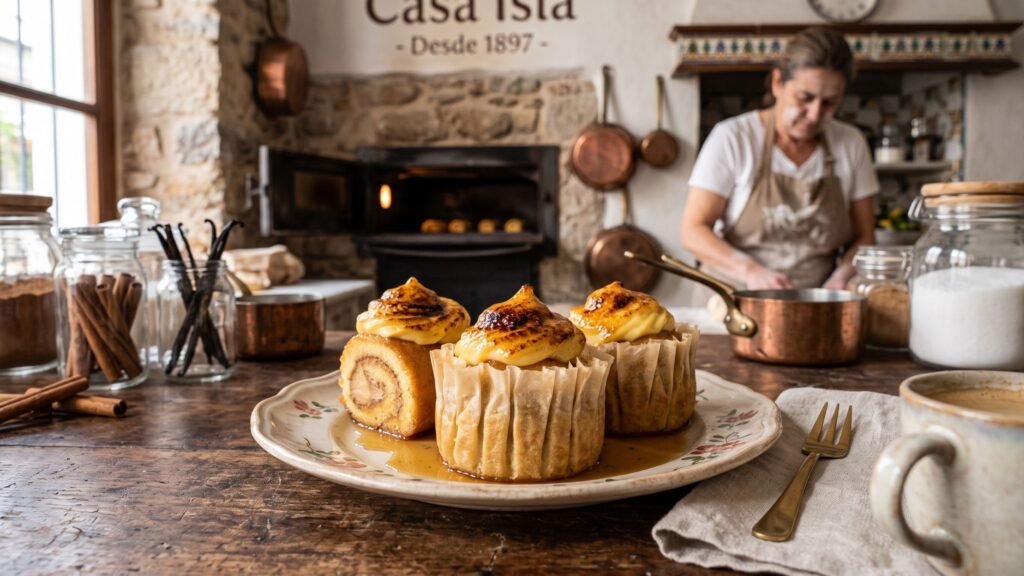
Quick Answer: The Pionono de Santa Fe is a legendary Spanish sweet originated in 1897 by pastry master Ceferino Isla in Santa Fe, Granada, to honor Pope Pius IX (Pío Nono). Characterized by its syrup-drenched sponge cylinder, cinnamon-custard filling, and caramelized toasted cream crown, its authentic benchmark remains Pastelerías Casa Isla.
When exploring the historical pastry landscape of Andalusia, few singular creations carry the geographical weight and cultural reverence of the authentic Pionono de Santa Fe. Born out of devotion and shaped by the cross-cultural culinary heritage of southern Spain, this bite-sized masterpiece is not merely a dessert—it is a protected culinary asset of the Province of Granada.
Whether you are navigating the historic center near the Plaza de Bib-Rambla or journeying directly to the military-camp-turned-town of Santa Fe where it all began, finding the absolute best piononos near you requires looking past mass-produced imitations to discover the historic workshops that respect the original late 19th-century methods.
The Top Destinations for Authentic Piononos
If you are currently searching for the absolute benchmark of this Andalusian treat, the culinary map narrows down to a few historic institutions in and around Granada.
+-----------------------------------+-----------------------------------+-----------------------------------+
| Establishment                     | Primary Location                  | Distinctive Feature               |
+-----------------------------------+-----------------------------------+-----------------------------------+
| Pastelería Casa Isla              | Calle Real de Santa Fe / Granada  | The original 1897 secret recipe   |
| Café Pastelería López-Mezquita    | Calle Reyes Católicos, Granada    | Historic ambiance, silky custard  |
| Gran Café Bib-Rambla              | Plaza de Bib-Rambla, Granada      | Classic pairing with local coffee  |
| Casa Pasteles                     | Barrio del Albaicín, Granada      | High-density artisanal toasted top|
+-----------------------------------+-----------------------------------+-----------------------------------+
1. Pastelerías Casa Isla (The Original Ancestor)
To taste a pionono where it was conceived, one must go to the source. Founded by Ceferino Isla, Casa Isla has guarded the precise ratios of its syrup infusion for well over a century. The flagship workshop on Calle Real in Santa Fe remains a pilgrimage site for international food critics and sweet enthusiasts alike. The texture here strikes a precise balance: the sponge is saturated with a rum-laced sugar syrup without becoming structurally weak, and the crown displays a clean, crackling caramelization reminiscent of a classic French crème brûlée.
2. Café Pastelería López-Mezquita
For those staying strictly within Granada’s urban core, this historic location on Calle Reyes Católicos offers an exceptional rendition. Local food historians frequently highlight their pastry cream, which avoids over-thickening with cornstarch to preserve a smooth, velvety mouthfeel that lets the warmth of the Ceylon cinnamon shine through.
Anatomy of a Masterpiece: Why the Structure Matters
A true Pionono de Santa Fe relies entirely on physical structural execution rather than artificial stabilizers. Unlike common sponge rolls, the preparation demands a meticulous multi-tier process:
- The Airy Sponge Base: Made solely from eggs and sugar whipped to a light density. The natural rise comes entirely from trapped air rather than chemical leavening agents.
- The Al-Andalus Spice Profile: The inclusion of lemon peel and cinnamon infused slowly into the whole milk base traces directly back to the historic Arab influence in Andalusian baking.
- The Crown Symbolism: The toasted cream swirl on top is not decorative; it was deliberately designed to mimic the papal skullcap (zucchetto), giving the pastry its distinct silhouette.
Chronology of a Legacy
- 1897: Master baker Ceferino Isla opens his artisanal shop in Santa Fe, crafting a pastry to commemorate the legacy of Pope Pius IX (Pío Nono in Italian).
- Early 1900s: King Alfonso XIII tastes the pastry during a royal visit, eventually granting Casa Isla the coveted title of official supplier to the Royal House.
- 2026: The fifth generation of artisanal bakers continues to utilize the closely guarded original production techniques across Granada.
“The true magic of the Pionono lies in the temperature contrast during the final torching. The interior must remain cool, wet, and deeply aromatic, while the very top surface undergoes rapid caramelization to lock in the moisture.” — Architectural Gastronomy Analysis
When looking for the best options near your location, always ensure the establishment torches their sugar crust on demand or cycles through fresh batches hourly. A stale pionono suffers from sugar crystallization, which destroys the delicate, airy balance of the sponge layer. For travelers exploring the wider Andalusian region, seeking out these verified locations ensures you experience an authentic bite of culinary history.