

In 2026, few emerging terms have captured online curiosity quite like Merfez. What began as a niche mention across design blogs and creative communities has rapidly evolved into a trending keyword appearing in productivity forums, home décor inspiration boards, branding discussions, and digital lifestyle content. As interest continues to grow, people are increasingly searching for the meaning of Merfez, its origins, and why it has become associated with modern creativity, organization, and intentional living.
But what does Merfez actually mean? The answer is surprisingly layered. The term is linked to a real coastal village in southern Turkey and is also connected to the Turkish word merkez, meaning “center” or “hub.” Beyond its linguistic roots, Merfez has developed a broader cultural identity in 2026, symbolizing balance, focus, minimalism, and connected living. From productivity systems and creative workflows to aesthetic design trends and personal branding, Merfez is becoming a powerful concept that reflects how people structure their spaces, ideas, and digital lifestyles in an increasingly fast-moving world.
What Does Merfez Actually Mean?
Merfez does not have a single fixed definition, and that is largely intentional — or at least it has become a feature rather than a flaw. The word sits close to the Turkish merkez, which translates roughly as “center,” “hub,” or “focal point.” That spatial, organizational sense is the thread running through almost every modern use of the term. Whether someone uses it to describe a productivity system, a creative aesthetic, or a travel destination, the underlying idea tends to be the same: a central point from which everything else radiates.
At the same time, Merfez has developed distinct layers that go beyond etymology. In lifestyle contexts, it has come to represent a deliberate, simplified way of living — less clutter, more intention. In digital culture, it appears as a brand name or identity marker, valued precisely because it carries no heavy pre-existing associations in most Western languages. In design circles, it evokes handcrafted textures, warm materials, and spaces that feel both thoughtful and grounded.
The flexibility is worth taking seriously rather than treating as vagueness. Terms that carry a feeling — rather than a strict denotation — often spread faster precisely because different communities can each see themselves in them. Merfez appears to be that kind of word. The best working definition might simply be: a concept centered on clarity, connection, and the value of focusing on what actually matters in a given context.
Historical & Cultural Origins of Merfez
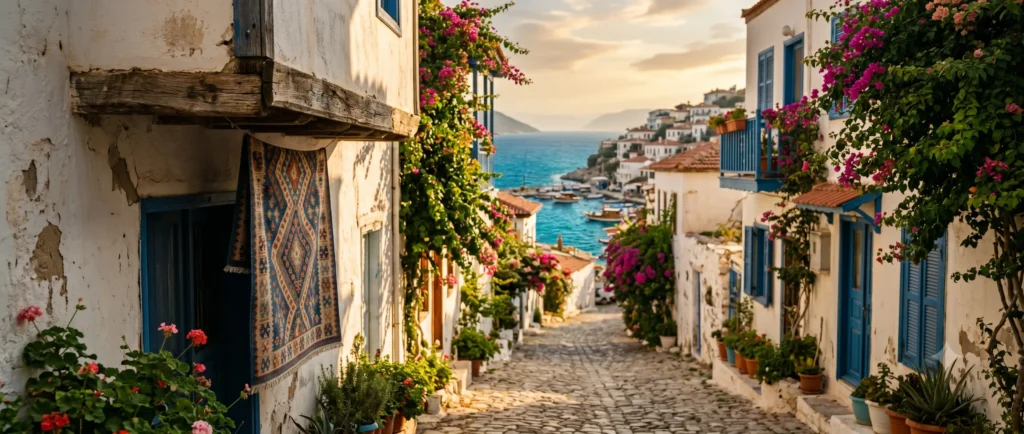
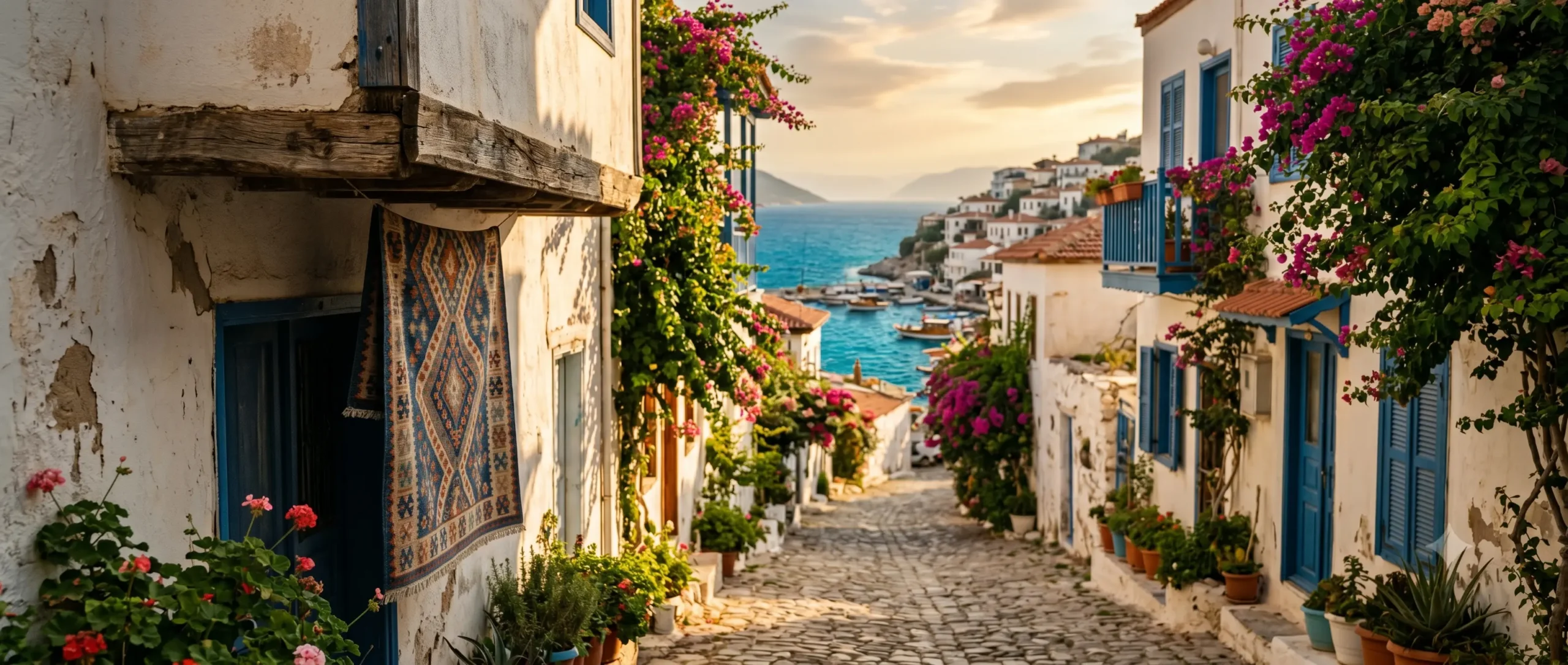
One of the more concrete anchors for the term is a coastal village in southern Turkey that carries the name Merfez. Located along what is broadly known as the Turquoise Coast — a stretch of Aegean and Mediterranean shoreline that has drawn travelers, traders, and settlers for centuries — this small settlement has been shaped by an unusually layered history.
The region’s documented past includes Phoenician and Lycian settlements, later Byzantine administrative structures, and then centuries of Ottoman rule. Venetian and Genoese traders also passed through these waters. That accumulation of influence left physical and cultural traces — architectural remnants, textile traditions, and a coastal vernacular that blends materials and methods from different periods. Whitewashed walls alongside older stonework, narrow lanes that were never designed for any particular century’s traffic, seasonal rhythms tied to the sea.
Whether or not the word “Merfez” itself derives directly from this village or from a broader regional linguistic tradition is not entirely settled. What is clear is that the geographic association has fed into how the term feels in contemporary usage. It carries the texture of a place that is old without being formal, layered without being chaotic, and unhurried without being disengaged from the present.
“
“Merfez resonates because it points to something most people are already looking for — a center. A place where the different parts of your life or work actually connect instead of just coexisting.”
— Editorial observation, GossipWire Cultural Desk
How Merfez Is Used Across Different Fields in 2026
The term shows up in at least five distinct contexts today, and understanding each one separately makes the whole picture clearer. None of these uses contradicts the others — they all share that same centering, clarifying impulse — but they each have their own logic and their own community.
1. Productivity and Workflow Organization
In productivity circles, Merfez describes a systems-thinking approach where tasks, goals, and information flow through a single coordinating point rather than being scattered across multiple disconnected tools or mental models. The idea is not to add another layer of complexity but to strip things back to a central structure that actually makes different activities legible in relation to each other.
This is philosophically close to older organizational concepts like the “second brain” frameworks popularized by writers such as Tiago Forte, or to the Getting Things Done methodology developed by David Allen. What Merfez adds, at least in how practitioners describe it, is a stronger emphasis on reducing the number of active nodes in your system. Rather than maintaining parallel inboxes, project trackers, and note repositories, a Merfez-influenced approach asks where the actual center is and builds everything else around that point.
Practically, this often means choosing one primary tool — a notes app, a project management platform, a physical notebook — and treating it as the genuine hub rather than one option among many. The benefit, according to those who use the approach, is that it reduces the cognitive overhead of maintaining multiple systems while making it easier to find and act on information when it’s actually needed.
2. Artisan Textiles and Handcraft Identity
A separate strand of Merfez usage connects directly to the textile and craft traditions of the Aegean and eastern Mediterranean region. Here, the term gets applied to handwoven rugs, embroidered textiles, and natural-dye fabric work that reflects the layered cultural heritage of southern Turkey and surrounding areas.
These craft traditions have existed for centuries but have seen renewed interest as global consumers increasingly seek out objects with traceable provenance, visible maker skill, and materials that age naturally rather than wearing out anonymously. Merfez, as an artisan identity, signals that kind of work — pieces that carry their making in their texture, that document a place and a set of hands in ways that machine production cannot replicate.
The sustainability dimension matters here too. Smaller production runs, natural fibers, traditional dyeing methods, and direct relationships between makers and buyers all align with a broader shift in consumer attention toward objects that have a meaningful story and a lighter environmental footprint. Reliable industry-wide figures remain limited, but the general direction of slow craft and artisan goods markets has been positive for over a decade.
3. Travel and Sustainable Tourism
The village dimension of Merfez connects to a broader shift in travel culture. As major tourist corridors in Turkey — Cappadocia, Istanbul, Bodrum — have become progressively busier, a segment of travelers has actively sought out smaller settlements with genuine history, quieter infrastructure, and the kind of texture that doesn’t arrive pre-packaged.
A coastal village with a layered history, bougainvillea-draped lanes, access to the sea, and proximity to Lycian ruins fits that appetite well. Spring and early autumn are often cited as the best visiting periods — mild temperatures, fewer visitors, and a sense that the place is still primarily a functioning community rather than a backdrop. The sustainable tourism dimension matters: smaller settlements benefit more directly from visitor spending than large resort complexes, and the experience tends to be richer on both sides of the exchange.
Merfez as a Lifestyle Philosophy
Perhaps the most widely circulated use of Merfez in 2026 is as a shorthand for a particular approach to daily life — one that prioritizes clarity and intentional choice over accumulation and busyness. This is not a radically new idea. Strands of it appear in minimalism movements, in the Japanese concept of ma (negative space as meaningful), in Scandinavian notions of lagom (roughly, “just enough”), and in various slow-living communities that gained momentum through the 2010s and into the 2020s.
What Merfez adds to this conversation is a slightly different framing. Where minimalism often implies a subtractive process — removing things until you reach an acceptable floor — the Merfez approach is more spatial. It asks: what is the center here? What would everything else ideally organize itself around? That question works for physical spaces, for work schedules, for creative projects, and for relationships. The direction is centripetal rather than purely reductive.
In practical terms, people who describe their approach as Merfez-influenced tend to make decisions about what to keep based on whether something actively serves the center — whatever they’ve identified as the core of a particular area of their life — rather than simply whether it sparks joy or falls below a possession threshold. The result is often similar to minimalism visually, but the reasoning is different.
Merfez in Interior Design and Home Décor
In interior design, Merfez has become shorthand for a specific aesthetic sensibility: spaces that feel warm without being cluttered, handcrafted without being rustic, and layered without being confused. The reference point is a certain idea of Mediterranean and Aegean domestic life — stone floors, natural textiles, objects that have been used for a long time and show it.
Key materials in Merfez-adjacent design tend to include unfinished or lightly finished wood, hand-thrown ceramics, natural linen and wool, terracotta, and woven textiles with visible structural texture. The palette skews toward earthy neutrals — sand, clay, soft white, olive — with occasional deep accent tones drawn from the region’s indigo and madder dyeing traditions.
What distinguishes this from generic “boho” or Mediterranean-influenced décor is the centering logic again. A Merfez-influenced space isn’t just a collection of interesting objects; it’s built around a clear idea of how the space will be used and what it should feel like to spend time in. Every element connects back to that organizing intention. The result is interiors that read as coherent rather than assembled.
This has obvious overlap with other named aesthetics — wabi-sabi, japandi, slow living interiors — but Merfez carries its own geographic and cultural specificity. It is rooted in a particular stretch of coastline, a particular history of craft, and a particular relationship between indoor and outdoor space that reflects the climate and social rhythms of the eastern Mediterranean.
Merfez in Digital Culture and Brand Identity
Online, Merfez has attracted attention as a brand name and digital identity marker for a straightforward reason: it is distinctive, easy to pronounce across multiple languages, carries no heavy baggage in most Western markets, and sounds contemporary without being a coined neologism. For independent creators, small businesses, and content-focused platforms, that combination is genuinely valuable.
The naming decision matters in digital contexts because brand names increasingly need to work as search terms, social handles, and spoken identifiers simultaneously. A name that is hard to spell, already saturated, or easily confused with a category term creates real friction. Merfez avoids most of those problems. It’s distinctive enough that a search for it returns relatively specific results, and its aesthetic associations — craft, intentionality, warm design — complement the kind of brand identities that creative businesses are typically trying to build.
In content creation specifically, “Merfez” has been used to describe a particular visual and editorial style: one that is calm, deliberate, and rooted in real-world textures rather than the hyper-saturated, rapid-cut aesthetics of mainstream social media. This is sometimes positioned explicitly as an alternative to algorithmic content norms — slower, richer, designed for people who are willing to stay with something rather than scan through it.
Merfez in Literary and Creative Contexts
A less commonly discussed but interesting strand of Merfez usage places it within literary experimentation. Some writers and critics have used the term to describe a genre or mode of writing that blends narrative forms — prose and poetry, realism and abstraction — in ways that resist easy genre categorization. The specific claim that this constitutes an established literary movement is difficult to verify independently, and reliable academic documentation remains limited. What seems more accurate is that “Merfez” has been adopted as a loose term by certain independent literary communities for work that resists conventional storytelling templates.
The connection to the term’s broader identity holds here too. Literature described as Merfez tends to orbit a central emotional or philosophical inquiry rather than progressing through a conventional plot architecture. The form serves the center, rather than the center being generated by the form. Whether or not this constitutes a genuine movement or simply a useful critical shorthand, the aesthetic sensibility it points to is coherent and recognizable.
“The appeal of Merfez isn’t nostalgia for a simpler time. It’s the recognition that having a center — in your work, your space, your creative life — is what makes everything else actually function.”
— GossipWire Editorial Desk
Why Merfez Resonates in 2026
Terms like this don’t spread randomly. They gain traction when they give people language for something they’re already experiencing but haven’t had a precise word for. The question worth asking is: what is Merfez naming that wasn’t clearly named before?
The most honest answer is probably this: the problem of too many unconnected options. Across productivity tools, design choices, content formats, lifestyle philosophies, and travel destinations, most people aren’t suffering from scarcity. They’re navigating an enormous surplus of alternatives, each claiming some version of quality or relevance. What’s harder to find is a framework for deciding what actually goes at the center — what the hub is — and letting everything else derive its value from proximity to that core.
Merfez provides a word, and by extension a conceptual anchor, for that kind of thinking. It connects a real geographic and cultural heritage — the layered history of a southern Turkish coastline — with a practical organizing principle that applies across very different domains. That combination of rootedness and portability is part of what makes it stick.
There is also something to be said for the aesthetic texture of the word itself. It sounds grounded, carries a faint international quality without being exotic in a commodifying way, and has enough distinctiveness to be memorable. In an environment where new terms appear and disappear quickly, those surface qualities matter more than they might in other eras.