

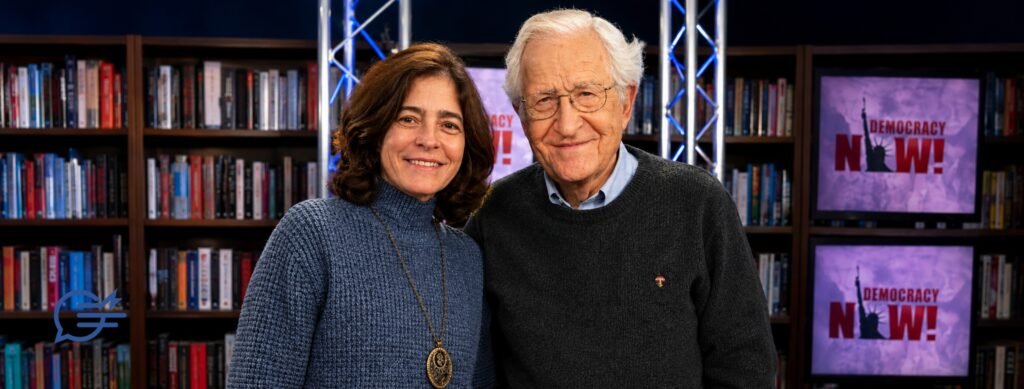
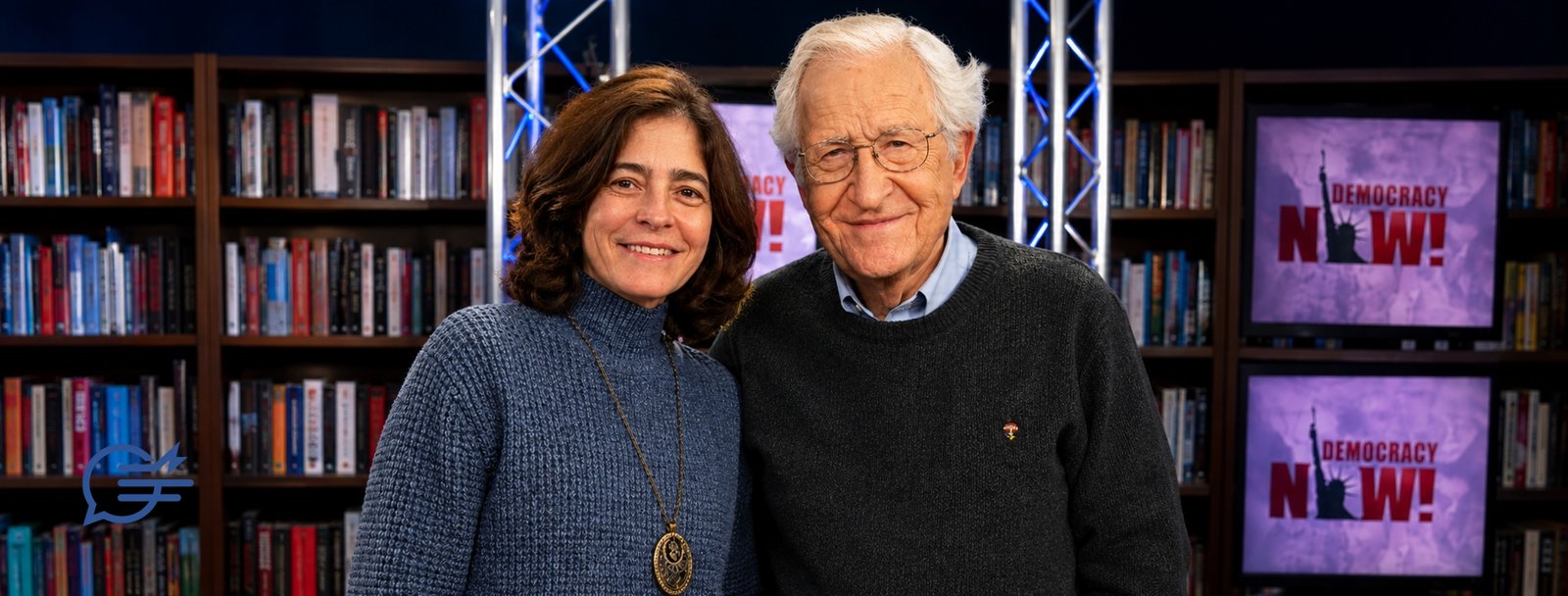
In the world of linguistics, academia, and intellectual discourse, few names carry as much weight as Noam Chomsky. But standing quietly — and powerfully — beside him is Valeria Wasserman Chomsky: a Brazilian translator, linguist, legal professional, and the woman who brought renewed warmth and partnership to one of the greatest minds of the modern era.
Valeria Wasserman is not a celebrity in the conventional sense. She does not seek red carpets, viral moments, or media attention. Yet the world is deeply curious about her — because the life she has built, quietly and deliberately, represents something rare: a partnership of equals rooted in shared intellectual passion, cultural bridge-building, and unwavering personal integrity. Born in Brazil around 1963, Valeria has crafted a career spanning investment banking, law, print translation, and academic linguistics — a journey that is as fascinating as it is understated.
This comprehensive biography explores every verified dimension of Valeria Wasserman’s life — from her formative years in Brazil to her marriage to Noam Chomsky in 2014, her professional body of work as a translator at ArtVentures Cultural Projects & Translations, and her courageous public statements during some of the most scrutinized moments of Chomsky’s later life. Whether you are a Chomsky scholar, a linguistics enthusiast, or simply curious about the remarkable woman who stands by history’s most-quoted living intellectual, this is the definitive guide.
Early Life & Brazilian Roots
Valeria Galvão Wasserman was born in 1963 in Brazil, most likely in or around the Poços de Caldas region of the state of Minas Gerais — a municipality celebrated for its natural mineral springs, lush landscapes, and vibrant cultural life. Poços de Caldas sits on one of the world’s largest alkaline massifs and has long been considered a hub of intellectual and artistic heritage in southeastern Brazil, making it a fitting origin for someone who would go on to dedicate her life to the beauty and precision of language.
Details about Valeria’s parents and siblings remain entirely private — a reflection of her deeply held personal values around privacy and discretion. What is clear from her career trajectory is that she was raised in an environment that nurtured intellectual curiosity. Growing up in Brazil during the final turbulent decades of the country’s military dictatorship, which lasted from 1964 to 1985, would have shaped any young person’s awareness of power, language, and the politics of communication. For Valeria, this political and cultural backdrop likely deepened her appreciation for how language functions not just as communication, but as a tool of persuasion, resistance, and cross-cultural understanding — themes that would later define both her professional work and her marriage to one of the world’s foremost political dissenters.
From a young age, Valeria demonstrated a marked passion for both analytical thinking and linguistic expression. These twin interests would guide her educational decisions and eventually produce a uniquely versatile professional: one equally comfortable navigating the dense legal codes of Brazilian commercial law, the volatility of capital markets, and the cultural subtleties embedded in academic prose translation.
You Can Read About Growth Enterprises Market
Education & Academic Journey
Valeria Wasserman pursued an ambitious and dual-track academic path that reflects the breadth of her intellectual interests. In 1984, she enrolled simultaneously at two of Brazil’s most prestigious universities — a rare accomplishment that speaks to both her intellectual capacity and her determination.
At Universidade Federal Fluminense (UFF), located in Niterói, Rio de Janeiro state, she pursued a degree in Law from 1984 to 1986. UFF is consistently ranked among Brazil’s top federal universities and is particularly noted for the rigor of its legal faculty. Studying law there gave Valeria a methodical, precision-oriented approach to argument, evidence, and documentation — skills that would prove invaluable in both her later legal work and her translation career, where fidelity to meaning is paramount.
Concurrently, from 1984 to 1988, she attended the Pontifícia Universidade Católica do Rio de Janeiro (PUC-Rio), one of the most respected private universities in Latin America, where she studied Languages — specifically Portuguese and English. PUC-Rio is internationally recognized for its humanities and social sciences programs. This linguistic education gave Valeria not just fluency, but a deep theoretical grounding in how language systems function, differ, and interact — knowledge that forms the bedrock of serious translation work.
In 1995, Valeria returned to academia once more for a specialization course in capital market analysis at the Universidade de São Paulo (USP) — the largest university in Brazil and one of Latin America’s foremost research institutions. This financial specialization came at a pivotal moment in Brazil’s economic history, following the launch of the Plano Real in 1994, which stabilized the country’s currency and opened new avenues in domestic capital markets. Her training at USP equipped her with the analytical tools necessary for her subsequent career in investment banking and financial analysis.
Career Breakthrough & Translation Work
Valeria Wasserman’s professional life unfolded across several distinct phases — finance, law, print media, entrepreneurship, and finally academic translation — each building upon the last to produce a uniquely well-rounded communicator and cultural intermediary.
Her career began in 1992 at Unibanco, one of Brazil’s largest and most prominent commercial banks at the time (later absorbed into Itaú Unibanco, which is today the largest private-sector bank in the Southern Hemisphere). At Unibanco, Valeria worked as an investment analyst — a demanding, quantitatively driven role that required mastery of financial modeling, macroeconomic assessment, and portfolio evaluation. She remained in this role for approximately three years, building a professional foundation that was a world away from the linguistic arts she would later champion.
In December 1995, she transitioned into the legal sector, working as a legal claims assistant at the law offices of Corey R. Cutler. She followed this with a position at the law firm of Ralph A. Donabed starting in March 1997, where she served as a legal assistant for approximately eight months before taking an extended personal sabbatical. These legal positions allowed her to apply the frameworks she had studied at UFF in a real-world context, developing expertise in legal documentation, claims processing, and client communication across both Portuguese and English-language environments.
By July 1999, Valeria returned to the workforce, this time gravitating toward the print and media industries. She worked in print translation through 2001, marking her first formal foray into the field she would ultimately make her life’s work. From October 2001 to October 2003, she served as director’s assistant at the National Association of Magazine Publishers — a role that placed her squarely at the intersection of media, communication, and publishing, further sharpening her understanding of how language functions in mass dissemination contexts.
In July 2006, Valeria took an entrepreneurial leap and founded Little Faces LLC, a business entity she established in Boston, Massachusetts. Though the company is now inactive, its founding reflected her ambition and her willingness to operate independently. The venture represented a transitional chapter in which she explored the possibilities of building something entirely her own.
“
“Valeria’s sudden appearance is one of those wonderful things. Life without love is a pretty empty affair.”
— Noam Chomsky, speaking about Valeria on Democracy Now!, 2015
The most consequential chapter of Valeria’s career began in July 2009, when she joined ArtVentures Cultural Projects and Translations as a professional translator. ArtVentures is an organization dedicated to cultural exchange, providing a platform where translators, authors, and artists collaborate to bring important works across linguistic and national borders. It was here that Valeria’s dual expertise in law and linguistics converged most powerfully.
Her translation portfolio at ArtVentures includes an impressive range of academic and cultural texts. Among her most notable projects are David Lehmann’s scholarly work on religion and social hope in Latin America, environmental and legal research on the ecological damage of mining operations in São Paulo state, Roberto Varjabedian’s legally intricate analysis of Atlantic Rainforest conservation law and its regression, and Dianne Newell’s institutional history of the Peter Wall Institute for Advanced Studies. Each of these texts required not just linguistic accuracy but deep contextual understanding — of Brazilian environmental policy, legal frameworks, social science methodology, and academic institutional culture. Valeria delivered all of these with documented recognition for her accuracy and cultural sensitivity.
What distinguishes Valeria’s translation work from mere technical rendering is her philosophical commitment to preserving meaning across cultural boundaries. Academic translation — particularly in fields like environmental law, political theory, and social science — demands more than bilingualism. It requires a translator who can navigate the assumptions embedded in one cultural tradition and re-express them in ways that resonate authentically in another. Valeria Wasserman’s training in both law and linguistics, combined with her life experience across Brazil and the United States, makes her exceptionally well-equipped for this challenge.
Net Worth, Income & Financial Life
Valeria Wasserman is not a public figure who discloses financial information, and no verified statements of her income or assets exist in the public record. Based on career-spanning analysis by multiple biographical sources, her estimated net worth as of 2026 is believed to fall in the range of $1 million to $2 million — an estimate derived from her combined career earnings across investment banking, legal work, and over fifteen years of specialized academic translation.
It is worth noting that academic translation — particularly for complex texts in environmental law, political science, and philosophy — is a specialized and intellectually demanding profession that commands significant compensation, particularly when the translator’s reputation and linguistic precision are well established. Valeria’s tenure of over fifteen years at ArtVentures and her association with internationally recognized scholars lend her both credibility and market value in this niche field.
More Lifestyle & Intellectual Profiles
If you enjoy in-depth profiles of the remarkable individuals shaping culture, academia, and intellectual life, we recommend exploring Democracy Now! — the award-winning global news outlet for interviews with figures like Noam Chomsky, and the University of Arizona Department of Linguistics, where Chomsky currently holds his position and where Valeria has accompanied him on numerous academic engagements.
Personal Life & Marriage to Noam Chomsky
The most publicly discussed aspect of Valeria Wasserman’s life is, understandably, her marriage to Noam Chomsky. The two were wed in 2014 — approximately six years after the passing of Chomsky’s first wife, Carol Doris Schatz Chomsky, in December 2008. Carol had been Chomsky’s partner for nearly six decades, and her loss was, by Chomsky’s own admission, a profoundly destabilizing grief. He has spoken openly about how Valeria’s presence in his life represented a renewal — a second chapter of love and companionship that he had not expected.
The age gap between the couple — Chomsky was born in December 1928, making him approximately 35 years older than Valeria — attracted considerable public commentary at the time of their marriage. Yet those who know them have consistently described the relationship as one of genuine intellectual and emotional compatibility. Valeria was working as a translator for the Institute for Advanced Studies at the University of São Paulo when the couple met — a context that speaks directly to the shared world of language, ideas, and academic culture that brought them together.
In a candid 2015 interview with Democracy Now!, Chomsky reflected on their relationship: “Valeria’s sudden appearance is one of those wonderful things,” he said, going on to describe how her presence had reinvigorated his personal life even as his professional output continued undiminished. For Valeria’s part, she has never given a direct interview about their relationship, consistent with her steadfast commitment to privacy. But her actions speak clearly: she relocated with Chomsky to Tucson, Arizona, when he joined the University of Arizona faculty; she returned with him to São Paulo as his primary caregiver following his stroke in June 2023; and she has served as his most trusted public spokesperson during moments of crisis.
That crisis came in early 2024, when false and sensationalized reports began circulating on social media claiming that Chomsky had died. The misinformation spread rapidly, generating global headlines. It was Valeria who stepped forward publicly to correct the record with composure and clarity, confirming that her husband was alive and recovering. This moment — her calm, dignified response to one of the most distressing forms of modern misinformation — earned her widespread admiration and brought her into international focus for the first time in her own right.
In 2026, Valeria again entered public discourse when she publicly addressed Noam Chomsky’s association with Jeffrey Epstein, acknowledging it as a grave mistake and offering an apology on her husband’s behalf. This act — voluntary, unequivocal, and deeply courageous — revealed a woman of profound moral seriousness, willing to hold even those she loves accountable in public, rather than deflect, deny, or retreat into silence.
Valeria has no biological children of her own, but she is a devoted stepmother to Chomsky’s three adult children from his first marriage: Aviva Chomsky, a historian and professor known for her work on Caribbean history, U.S.–Latin American relations, and immigration; Diane Chomsky; and Harry Chomsky. The blended family has been described as warm and close-knit, frequently spending time together across both their American and Brazilian homes.
“Despite the global attention surrounding her husband’s legacy, Valeria Wasserman has built an identity anchored not in fame, but in purpose — in the quiet, courageous work of making ideas travel across languages and cultures.”
— GossipWire Editorial Desk
Who Is Noam Chomsky? Understanding the Man Valeria Married
To fully understand Valeria Wasserman’s place in public consciousness, one must appreciate the magnitude of the intellectual world she entered through her marriage. Avram Noam Chomsky was born on December 7, 1928, in East Oak Lane, Philadelphia, Pennsylvania, to William Chomsky and Elsie Simonofsky — both Ashkenazi Jewish immigrants whose deep engagement with Hebrew language, Zionist political theory, and progressive education shaped young Noam profoundly.
Chomsky attended the University of Pennsylvania at age sixteen, studying linguistics, mathematics, and philosophy under the mentorship of structural linguist Zellig Harris. He earned his Ph.D. from Penn in 1955 with a transformative thesis on transformational generative grammar — a theory that would upend the field of linguistics and lay the conceptual groundwork for modern cognitive science. He joined MIT in 1955 and remained there for over half a century, becoming Institute Professor Emeritus, the highest honor the university bestows.
Often described as “the father of modern linguistics,” Chomsky is simultaneously one of the most productive and cited political commentators of the modern era. He has written more than 150 books on topics ranging from universal grammar, the Chomsky hierarchy, and language acquisition to American foreign policy, corporate capitalism, and media propaganda. Between 1980 and 1992, he was cited more frequently in the Arts and Humanities Citation Index than any other living scholar. His name appears alongside Marx, Shakespeare, and the Bible in lists of the most-quoted intellectual sources in history.
It is this world — of radical ideas, global influence, and tireless intellectual production — that Valeria Wasserman entered in 2014. That she has navigated it with grace, privacy, and intellectual dignity, while also supporting Chomsky through the health challenges of his later years and the controversies that have attended his public life, is itself a testament to her character and quiet strength.