

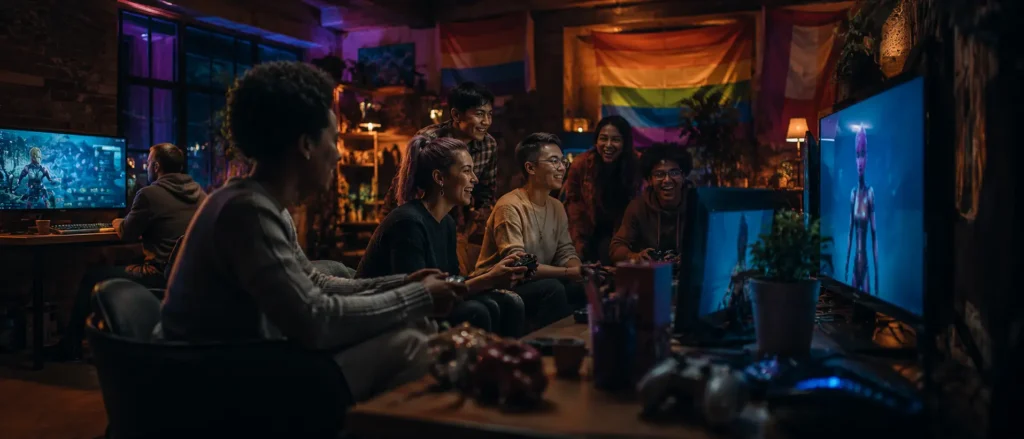
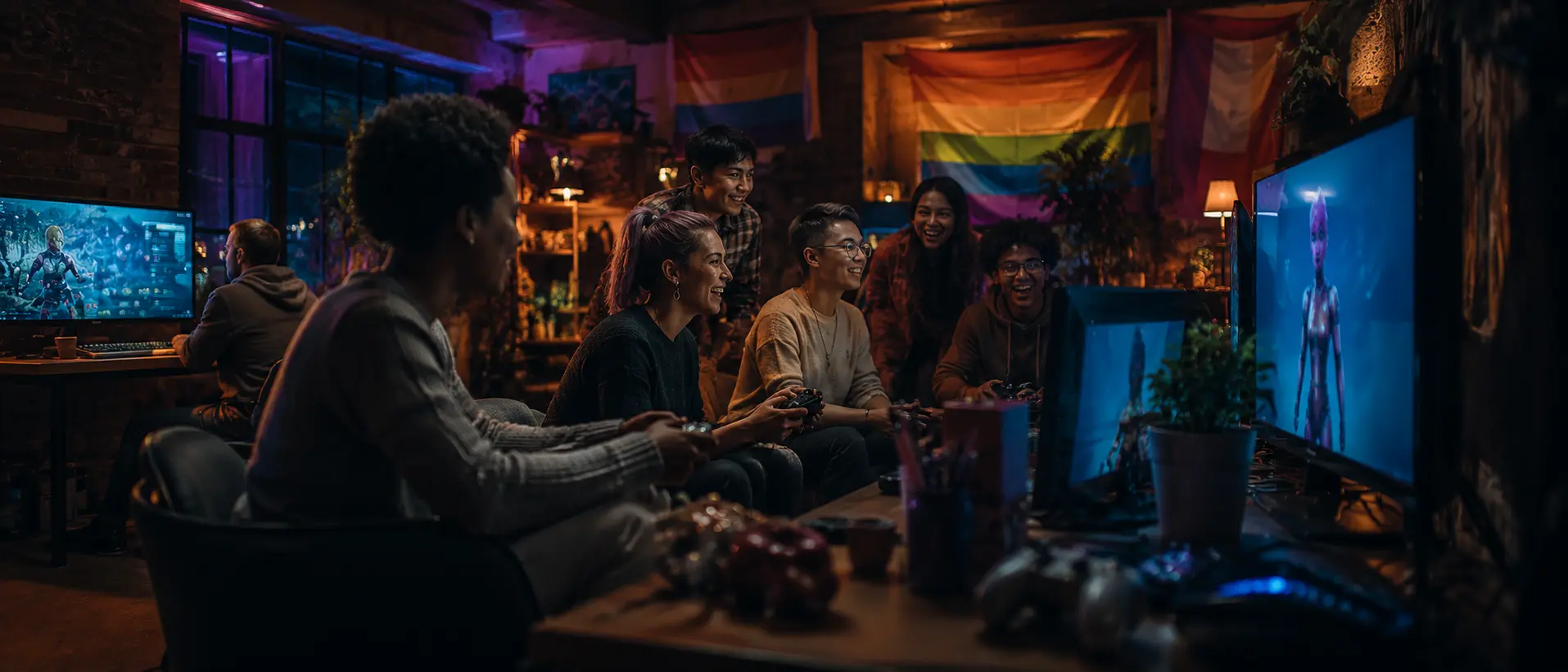
There are moments in digital culture when a single phrase stops functioning as a label and starts functioning as a signal — a way to mark the edges of a community that didn’t have a name before. Gaymetu E is one of those phrases. It appeared in gaming forums and Twitch chats, spread through Discord servers, and by 2025 had become a recognizable shorthand for something that players and creators had wanted for years: digital spaces where gaming, identity, and genuine belonging are not treated as separate concerns.
What makes Gaymetu E worth paying attention to isn’t just its growth, but what it says about where online culture is heading. This guide unpacks what the term actually means, where it came from, and why it has resonated across communities that rarely see themselves reflected in mainstream gaming spaces.
What Is Gaymetu E? A Proper Definition
Gaymetu E is a digital identity movement that sits at the intersection of gaming culture, LGBTQ+ representation, and community-driven online spaces. It is not a single app, a company, or a registered platform. Instead, it functions as a conceptual framework — a philosophy that defines what inclusive digital spaces should look, feel, and behave like.
The name itself carries layered meaning. Multiple observers have broken it down as: Game (the act of play and interactive digital culture), Me (individual self-expression and personal identity), Tu or You (collaboration, reciprocity, and shared experience), and E (electronic, energy, or ecosystem — depending on the community interpreting it). Together these elements describe a vision for online interaction that places belonging and creativity alongside gameplay, rather than treating them as optional extras.
Importantly, while Gaymetu E has strong roots in LGBTQ+ gaming communities, it is not an exclusively queer movement. Writers and communities across digital culture have consistently noted that the framework is open to anyone who values authenticity and inclusion in online spaces. The “gay” prefix reflects the movement’s origins in spaces where queer representation was historically absent or tokenized — but the broader vision extends to anyone who has felt sidelined by mainstream gaming culture’s emphasis on competition and performance over connection.
Psychologists have long identified belonging as a foundational human need. What Gaymetu E does, in practical terms, is apply that understanding to the design of digital spaces — building environments where people can show up as their actual selves rather than performing a version acceptable to the loudest voices in a server. For many LGBTQ+ gamers and players from marginalized communities, that distinction matters enormously.
Origins and How It Spread Online
The phrase first surfaced in niche gaming forums and online communities built around inclusive play. Early adopters used it informally — as a hashtag, a username modifier, a tag on Discord servers — to signal that a particular community or stream operated differently from mainstream gaming spaces. There was no single launch moment, no founder or press release. It was co-created by the communities that needed it.
The concept gained real traction through 2024 and into 2025. Gaming blogs, LGBTQ+ digital publications, and tech commentators all contributed to giving the movement a name it could scale with. Streamers on Twitch began using “Gaymetu E” as a tag to identify content that prioritized acceptance and creativity alongside gameplay. On Reddit, threads dedicated to inclusive gaming experiences referenced the term when describing what they were searching for in online communities.
“
“Online spaces scaled fast — and with that growth came toxicity and exclusivity. People wanted virtual spaces that felt genuinely human, not algorithmically hollow. Gaymetu E filled that gap by reframing what gaming culture could look like.”
— Community observation documented across multiple digital culture publications, 2025
The timing is worth noting. This movement didn’t appear in a vacuum. It emerged alongside broader cultural shifts: growing demands for LGBTQ+ representation in mainstream media, the post-pandemic acceleration of online community life, and a wave of games — including The Last of Us Part II, Hades, and Life is Strange — that demonstrated queer narratives could be commercially successful and critically acclaimed simultaneously.
Brands and content creators soon recognized the phrase’s potential as both a community signal and a content framework. Its flexibility — the fact that it could describe a philosophy, a community design principle, or a personal creative approach — made it adaptable across different platforms and purposes. That adaptability is arguably the main reason it spread as quickly as it did. You can find related discussions around inclusive and accessible online gaming spaces that reflect similar values of digital openness.
The Three Pillars: Gaming, Identity, and Community
Strip away the terminology and Gaymetu E rests on three interconnected pillars. Understanding each one separately makes the broader framework much clearer.
1. Play as an Entry Point, Not an End Goal
Games like Minecraft and Fortnite demonstrated long before Gaymetu E that multiplayer environments had outgrown simple entertainment. They became cultural spaces where millions of people negotiate identity and community norms daily. The Gaymetu E framework takes that observation seriously, treating games not as the destination but as the entry point — the shared activity that brings people together into a space where other things, including genuine self-expression, become possible.
In practice, this means Gaymetu E spaces tend to use flexible avatar systems, community-driven storytelling, and moderation structures that discourage the kind of toxic behavior that often drives marginalized players off mainstream platforms. The gameplay exists; it simply coexists with something else — a culture that treats who you are as part of the experience.
2. Identity as a Core Design Principle
Digital art, avatar customization, voice, aesthetic choices — within the Gaymetu E framework, these aren’t cosmetic. They are communication. They are how people signal who they are across Twitch, TikTok, YouTube, and Discord simultaneously. The movement’s emphasis on identity-as-design pushes back against gaming’s historical tendency to offer rigid character archetypes that reflect a narrow demographic.
This pillar has practical implications for game developers too. When development teams embrace diverse perspectives during production — not as an afterthought of diversity initiatives but as a genuine design input — they tend to produce richer, more emotionally complex narratives. The industry is slowly absorbing this lesson. Games that have placed LGBTQ+ characters at the center of their stories, rather than treating queerness as a minor subplot, have repeatedly demonstrated that representation can strengthen commercial appeal rather than restrict it.
3. Community as the Medium Itself
The third pillar is where Gaymetu E diverges most sharply from conventional gaming culture. Traditional online spaces often treat community as a byproduct — something that happens when enough people play the same game. Gaymetu E inverts that relationship, treating community design as primary and gameplay as the occasion for it.
Spaces operating under these principles typically include moderation structures that actively protect vulnerable participants, privacy features that allow people to engage anonymously when necessary, peer support networks woven into the community architecture, and shared guidelines that members help create rather than simply receive. The digital commons analogy is useful here: these aren’t platforms where you go to consume content, but spaces you go to co-produce them.
*Figure cited in industry commentary via novabiztechnology.com (2026). No universally verified statistic currently exists across major gaming industry reports.
Where Gaymetu E Lives Online: Platforms and Spaces
Because Gaymetu E is a philosophy rather than a product, it shows up differently depending on where you look. The movement has no single home, which is both its structural flexibility and its organizing challenge. Here is where it manifests most visibly.
Twitch and Streaming Platforms: Streamers have been among the most visible carriers of Gaymetu E values. Many use the term as a channel tag or community descriptor, signaling to incoming viewers that the space prioritizes acceptance over performance metrics. Streams in this category tend to center conversation, creative play, and identity-affirming discussion alongside actual gameplay. The parasocial relationship between streamer and audience becomes something closer to community membership.
Discord Servers: Perhaps the most concentrated expression of Gaymetu E in practice exists in Discord. LGBTQ+ guilds, gender-affirming chat groups, and identity-focused gaming servers have built communities with detailed moderation frameworks, welcoming onboarding processes, and channels dedicated to non-gaming topics like mental health and creative work. These aren’t communities organized around a single game; they’re organized around shared values, with games serving as the gathering occasion.
Roblox and User-Generated Platforms: Platforms where users build their own games and environments have become natural habitats for Gaymetu E expression. The ability to design spaces — from visual aesthetics to community rules — allows creators to embed inclusive values directly into the architecture of a game world. This is participatory culture in a very literal sense.
TikTok and Short-Form Content: The movement has spread partly through short-form video content, where creators discuss inclusive gaming, share community highlights, and explain the Gaymetu E concept to audiences who may not have encountered it before. This content function — documentation and recruitment simultaneously — has helped extend the movement’s reach well beyond its original forums.
Technology Behind the Movement: AI, VR, and the Metaverse
Gaymetu E doesn’t just exist on current platforms. It maps closely onto where interactive technology is heading — which is part of why discussions about the movement tend to emphasize emerging tech alongside existing communities.
Artificial intelligence is already changing what inclusive gaming can look like in practice. AI moderation tools can filter harassment at scale while preserving the authentic voices that make a community worth inhabiting. AI-driven narrative systems can adapt storylines to player choices in increasingly sophisticated ways, creating stories that feel personally meaningful rather than generically delivered. For a movement built on the idea that personal identity should matter in digital spaces, adaptive AI storytelling is a natural fit. You can see how similar ideas about digital identity and personal expression are reshaping culture in profiles like emerging digital enterprise movements that prioritize community-centered frameworks.
Virtual reality introduces a different dimension. Immersive environments allow players to embody characters whose experiences diverge significantly from their own — a form of perspective-taking that has genuine implications for empathy and understanding. For queer narrative-focused games, VR’s potential to create emotionally resonant first-person experiences is significant. Observers have noted that the metaverse concept, however imprecisely defined, aligns naturally with Gaymetu E principles: persistent worlds where players build identities, form communities, and generate their own content offer the kind of expressive freedom the movement values.
Augmented reality and cross-platform integration add further layers. As gaming becomes accessible across phones, consoles, VR headsets, and desktop environments simultaneously, the barriers to participation drop. Gaymetu E communities can reach people who couldn’t previously afford console hardware or high-spec PCs. Mobile platforms in particular have been noted as democratizing vectors — visual novels, interactive fiction, and identity-forward games are among the most accessible categories on mobile, and they tend to align closely with Gaymetu E’s storytelling values.
Independent Creators and the Indie Advantage
One consistent feature of the Gaymetu E landscape is the prominence of independent creators and small development teams. Crowdfunding platforms and digital storefronts like Steam have lowered the barriers to releasing a game significantly. Small teams can build deeply personal, identity-forward titles that larger studios — with broader commercial mandates — tend to avoid. Games like Stardew Valley and Hades are often cited as examples where design choices that prioritize relationship mechanics and character depth over competitive systems have produced both critical and commercial success. The indie space is where many of the movement’s aesthetic and narrative experiments happen first.
“The question was never whether inclusive games could be commercially viable. It was whether the industry would commit to building them before the audience made the case impossible to ignore.”
— GossipWire Editorial Desk
Challenges and Honest Criticisms
Any fair account of Gaymetu E needs to acknowledge what makes it difficult to sustain, not just what makes it appealing. There are real structural challenges worth naming.
Backlash remains real and persistent. Parts of mainstream gaming culture have treated inclusive content as a political imposition rather than a legitimate creative choice. Communities and developers operating within Gaymetu E values have faced coordinated criticism, review manipulation, and harassment campaigns. This isn’t a minor friction point; it’s an ongoing structural challenge that requires genuine moderation resources and community resilience to manage.
Fragmentation is a structural risk. Because Gaymetu E is decentralized — no single platform, no unified governance, no membership list — communities can become isolated from one another. What functions well in one Discord server may look quite different in another. This flexibility is a strength in terms of adaptability, but it can weaken collective impact. Movements that cannot coordinate tend to be more easily marginalized than those that build shared infrastructure.
The sustainability question. Observers have noted that brands and companies sometimes adopt inclusive language or imagery without substantively changing how they operate. The risk for a movement like Gaymetu E is that its vocabulary gets absorbed by marketing departments while the communities that built it receive little material benefit. Distinguishing genuine commitment from surface-level adoption is a challenge the movement will continue to navigate. Related conversations about digital culture authenticity have appeared in coverage of online community conflicts and their resolutions.
AI moderation is imperfect. Even the most sophisticated content moderation systems make errors — both allowing harmful content through and removing legitimate speech. As communities scale, the gap between stated values and lived experience can widen. No technology currently exists that fully solves this problem, and relying too heavily on automated systems can create a false sense of security.
More on Digital Culture and Entertainment
For those interested in the intersection of digital identity and entertainment culture, our coverage of figures like Kwoklyn Wan — whose work spans cooking media and online community — and broader profiles of personalities navigating public identity offer useful context. The tensions between authenticity and platform expectations aren’t unique to gaming; they run across all forms of digital public life. If you love diving deep into celebrity identity, digital fashion, and exclusive lifestyle content.
Frequently Asked Questions
The conversations happening inside Gaymetu E communities are, in a real sense, field tests for what digital culture might look like if it prioritized humanity over engagement metrics. Whether that experiment produces something durable depends on whether the people running these communities, the platforms hosting them, and the developers creating for them sustain the commitment once the novelty fades. The evidence from 2025 suggests many of them intend to. You can follow related developments in digital media culture through our coverage of emerging digital trends and online communities at GossipWire.